

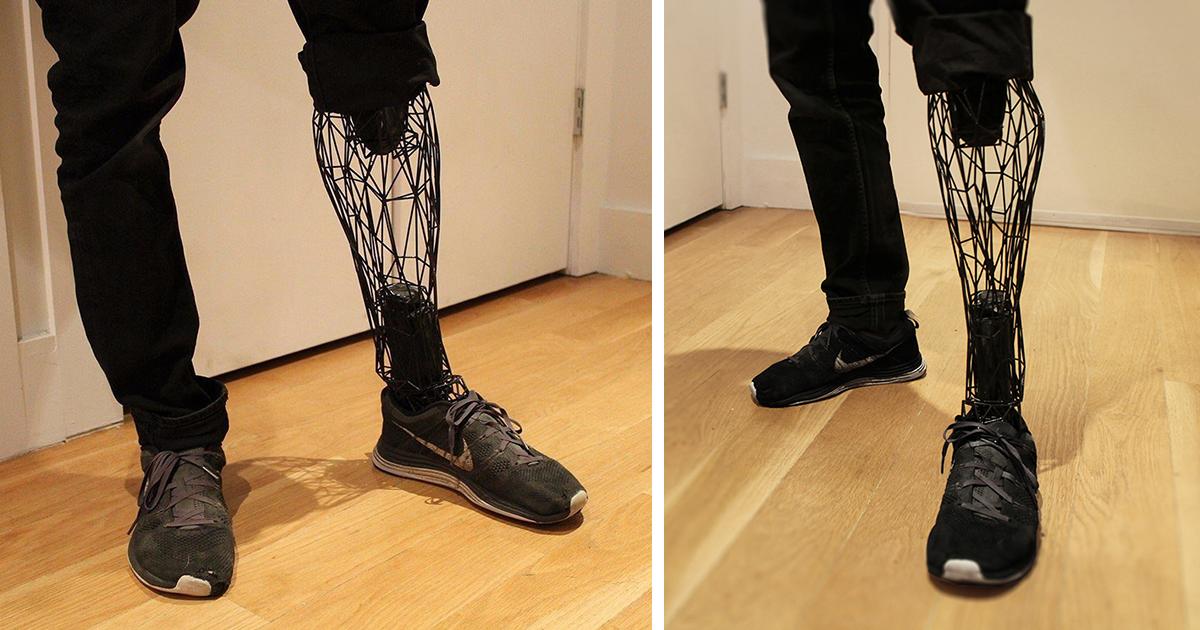
For decades, patients who needed ankle-foot orthoses and other supportive braces had to settle for devices that were either mass-produced and ill-fitting or hand-crafted through slow, expensive, and inconsistent processes. Today, a quiet revolution is reshaping how people access mobility support. Across the country, from small clinics to major rehabilitation centers in NY, 3D printed AFO braces are transforming what patients can expect from their orthotics. The shift is not just technological; it is deeply personal, offering individuals a level of precision and comfort that was previously out of reach.
The Limitations of Traditional Orthotic Fabrication
To understand why this revolution matters, it helps to look back at how custom orthotics were made before digital manufacturing entered the picture. Traditional custom orthotic fabrication relied heavily on plaster casting, manual trimming, and a great deal of trial and error. A clinician would take a plaster mold of a patient’s limb, send it off to a lab, and wait days or even weeks for a finished product. When the brace arrived, it often required multiple rounds of adjustments before it felt acceptable, and even then, many patients reported pressure sores, slippage, and general discomfort from devices that never quite matched their anatomy perfectly.
For pediatric patients, this process was especially frustrating. Children grow quickly, and a brace that fits well in January may become useless by summer. The cost and time involved in constantly replacing traditional child orthotics placed a significant burden on families. For adults dealing with neurological conditions, strokes, or traumatic injuries, an ill-fitting brace could mean the difference between regaining independence and remaining dependent on caregivers. The system was functional, but it was far from ideal.
How 3D Scanning and Digital Design Changed Everything
The introduction of 3D scanned orthotics marked a turning point in the field. Instead of relying on plaster molds, clinicians can now use handheld or stationary 3D scanners to capture an incredibly precise digital map of a patient’s limb in just a few minutes. This scan feeds directly into computer-aided design software, where an orthotist can model the brace with exact measurements, accounting for pressure points, range of motion, and specific functional goals.
This digital workflow dramatically reduces human error. The scan captures thousands of data points that a plaster cast simply cannot, including subtle contours and asymmetries that make each patient’s anatomy unique. Once the design is finalized, it goes directly to a 3D printer, which builds the brace layer by layer from durable, medical-grade materials. The result is a device that fits the patient’s body like a second skin rather than an approximation of it.
Custom fittings through this process are faster, more repeatable, and more consistent than anything the traditional method could produce. Clinics offering this technology in NY and beyond are reporting fewer return visits for adjustments and higher levels of patient satisfaction. For a field that has always been defined by its highly personalized nature, digital fabrication simply does what handcrafting always aspired to do, only with greater accuracy and speed.
Why Lightweight Foot Drop Braces Are a Game-Changer
One of the most significant patient populations benefiting from this technology is those living with foot drop, a condition in which weakness or nerve damage makes it difficult or impossible to lift the front part of the foot. Foot drop affects people after strokes, spinal cord injuries, multiple sclerosis, and a range of other conditions. Traditionally, managing foot drop required bulky plastic AFOs that were heavy, hot, and difficult to conceal under clothing, creating both physical discomfort and emotional distress for wearers.
The development of lightweight foot drop braces through 3D printing has changed this experience fundamentally. Because 3D printing allows for internal lattice structures and variable wall thicknesses that would be impossible to achieve with traditional thermoforming, designers can now create braces that provide the same or superior mechanical support while using a fraction of the material. The result is a device that patients are far more likely to actually wear consistently, which is critical for rehabilitation outcomes.
This willingness to wear the device consistently leads to better gait patterns, reduced fall risk, and improved quality of life. Patients who previously avoided their AFOs because of size and weight are now reporting that they forget they are wearing their brace at all, which is perhaps the highest compliment a medical device can receive. Clinicians who specialize in 3D printed AFO braces are seeing this shift in compliance translate directly into better functional outcomes for their patients.
The Special Case of Child Orthotics and Growth Accommodation
Children present unique challenges in orthotic care that 3D printing is particularly well-suited to address. Beyond the growth issue already mentioned, children are often resistant to wearing braces that feel uncomfortable, look different from what their peers wear, or interfere with play. Traditional child orthotics, built from rigid plastic in standard shapes, often checked all of the wrong boxes. They were uncomfortable, conspicuous, and frequently abandoned in backpacks and closets.
3D printed child orthotics address these issues from multiple angles. The precision of custom fittings means the device is comfortable from day one, reducing the battle many parents face trying to convince a reluctant child to wear a brace. The ability to print in a variety of colors and even incorporate custom patterns means that children can choose a design that feels like theirs rather than a medical imposition. Some clinics have allowed kids to select everything from their favorite colors to graphic designs that make the brace feel more like an accessory than a medical device.
From a clinical standpoint, the faster turnaround time of digital fabrication means that when a child outgrows a brace, a replacement can be produced far more quickly than through traditional channels. Some practices are even experimenting with modular designs that allow for minor growth adjustments without requiring a completely new device. For families managing conditions like cerebral palsy, clubfoot, or juvenile idiopathic arthritis, these advances represent a meaningful reduction in both stress and expense.
The Future of Custom Orthotic Fabrication
The momentum behind 3D printed AFO braces and broader custom orthotic fabrication shows no sign of slowing. Materials science is advancing rapidly, with new polymers and composite materials offering better combinations of flexibility, durability, and weight than were available even a few years ago. Research into generative design, where artificial intelligence helps optimize brace geometry for strength and function, is beginning to make its way out of academic labs and into clinical settings.
Telehealth integration is another frontier. Some companies are developing systems that allow patients to perform their own 3D scans at home using a smartphone and a guided app, sending the data directly to an orthotist who designs and ships a custom device without requiring the patient to travel. For rural communities and individuals with limited mobility, this could be transformative. Clinics in NY and other densely populated areas are also exploring how these technologies can reduce wait times and expand access to populations that have historically struggled to receive timely orthotic care.
The democratization of 3D scanned orthotics means that the standard of care is rising across the board. What was once available only at cutting-edge specialty centers is becoming the expectation at orthotic practices of all sizes. Patients are better informed, more demanding of quality, and more aware of what modern technology can provide.
Conclusion
3D printed AFO braces, lightweight foot drop braces, and precision child orthotics represent a genuine leap forward in how people receive mobility support. The combination of 3D scanned orthotics, refined custom fittings, and advanced materials has created a standard that traditional fabrication simply cannot match. For patients, clinicians, and families navigating the challenges of orthotic care, this technology is not just an improvement; it is a new beginning.
Need a Prosthetic and Orthotic Laboratory Near You?
Prothotic Labratories, Inc. is a family-owned and -operated prosthetics and orthotics specialist based in Farmingdale, New York since 1988. We offer the highest quality of products, services, and patient care for all of your prosthetic and orthotic management needs. We specialize in pediatric prosthetics, but also offer adult products and services as well, such as scoliosis management, creating custom-designed prosthetics for the upper or lower extremities, and much more. We also have extensive experience in the orthotic management of cerebral palsy, arthrogryposis, osteogenesis imperfecta, spinal muscular atrophy, and neuromuscular and idiopathic scoliosis. Give us a call today, or visit us for more information!