

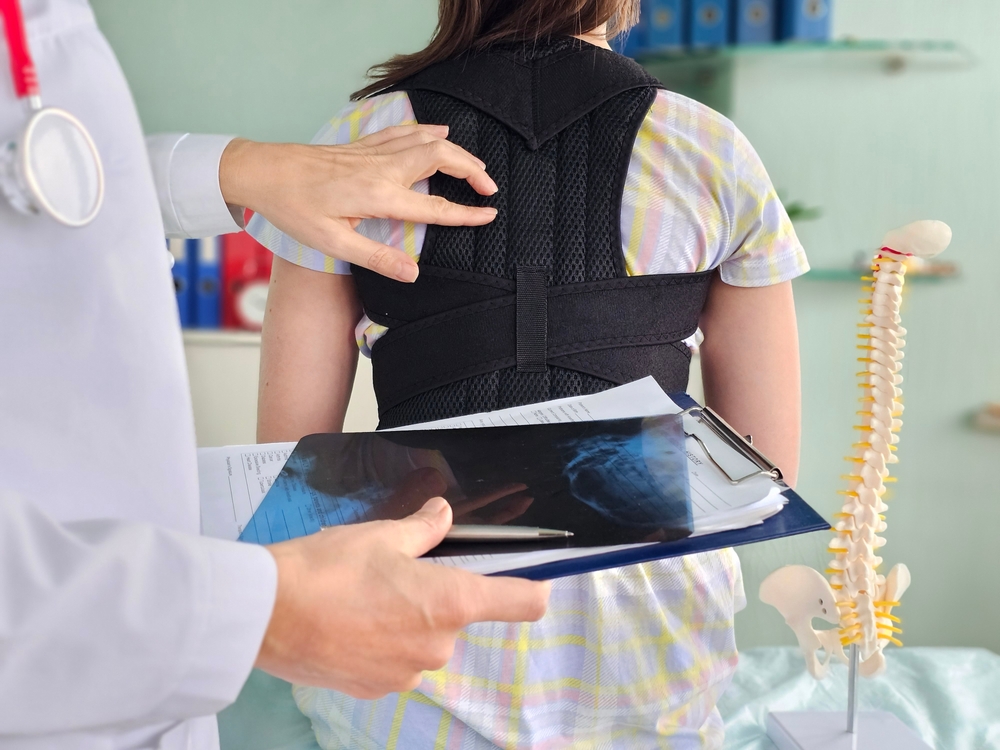
For teenagers navigating the social and physical challenges of adolescence, a scoliosis diagnosis can feel overwhelming. When a brace is prescribed, many teens resist wearing it consistently, largely because traditional options are bulky, hot, and uncomfortable. The rise of 3D printed TLSO brace technology is changing that story in meaningful ways.
From Farmingdale to across Long Island and throughout NY, families are discovering that modern custom spinal orthotics can make a real difference in how teens experience their treatment journey.
Why Compliance Is the Biggest Challenge in Pediatric Scoliosis Bracing
A brace only works when it is worn. This sounds simple, but pediatric scoliosis bracing has long struggled with the reality that teens are notoriously inconsistent patients. Research consistently shows that brace effectiveness is directly tied to the number of hours worn per day, yet studies also reveal that many adolescents significantly underreport their actual wear time.
The reasons are understandable. Traditional thoracolumbosacral orthosis (TLSO) braces are made from rigid polyethylene plastic that traps heat, restricts movement, and creates pressure points that can be genuinely painful after a few hours. When a teen sits through seven hours of school, participates in gym class, and then has to return home still wearing the same uncomfortable device, the temptation to take it off becomes overwhelming.
Social anxiety compounds the problem. Teens are acutely aware of how they look, and a thick, stiff brace that adds visible bulk under clothing can become a source of embarrassment and self-consciousness. For many adolescents, the emotional toll of wearing the brace outweighs the perceived benefit, especially when the condition being treated is invisible to others and the consequences of non-compliance feel abstract and far away.
This is exactly where the innovation of a 3D printed TLSO brace enters the picture. By addressing the core physical complaints that drive non-compliance, this technology is giving orthotists and families a powerful new tool for keeping teens on track with their treatment.
What Makes 3D Printed Technology Different From Traditional Bracing
The traditional brace manufacturing process involves casting a plaster mold of the patient’s torso, then modifying and fabricating a brace from that impression. The process is time-consuming, somewhat imprecise, and produces a device that is essentially a one-size-fits-one rigid shell with very limited ability to incorporate ventilation or refined structural variations.
3D printing transforms this process from start to finish. Instead of a plaster cast, clinicians now use advanced body scanning technology to capture a precise digital model of the patient’s trunk. That data is used to design a brace using specialized software that can optimize every curve, contact point, and pressure zone with a level of accuracy that simply was not possible before.
Once the design is finalized, the brace is printed using materials that can be calibrated for flexibility, strength, and breathability. Many 3D printed designs incorporate open lattice structures, which are geometric patterns of interconnected frames that provide structural support while allowing significant airflow across the skin. This is one of the primary reasons a breathable back brace for teens produced through 3D printing is so dramatically more comfortable than its traditional counterpart.
The result is a brace that fits the individual patient with exceptional precision, distributes corrective forces more evenly across the torso, and allows the skin to breathe in a way that makes extended wear genuinely tolerable. For teens who previously dreaded putting on their brace, the difference can be transformative.
How Improved Comfort Translates Into Better Treatment Outcomes
The connection between comfort and compliance is not just intuitive; it is supported by clinical evidence. When teens wear their braces for the prescribed number of hours, which is typically 16 to 23 hours per day for moderate to severe curves, the corrective forces have time to do their work. Consistent bracing during the period of skeletal growth can prevent curves from progressing to a severity that requires surgical intervention.
Custom spinal orthotics produced through 3D printing contribute to better outcomes in several specific ways. First, the precision fit means that corrective forces are applied exactly where they need to be, improving the biomechanical effectiveness of the brace itself. A poorly fitting traditional brace not only causes discomfort but also applies forces in imprecise locations, reducing its clinical value even when worn consistently.
Second, the breathable design addresses one of the most common complaints: heat and sweating. Skin irritation caused by moisture buildup is not just uncomfortable; it can lead to rashes and skin breakdown that give teens a medically legitimate reason to remove the brace. By allowing air to circulate, a breathable back brace for teens reduces this problem substantially.
Third, the low-profile nature of many 3D printed designs means the brace is less visible under clothing. This matters enormously to adolescents. When a teen can wear a fitted shirt to school without the brace being obvious, the social anxiety that drives removal during school hours diminishes. That translates directly into more hours worn per day, which translates into better clinical outcomes.
Families seeking pediatric scoliosis bracing in Farmingdale, NY and across Long Island are increasingly requesting this technology specifically because their teens have struggled with traditional braces in the past. Orthotists in the region who have adopted 3D printing report that patient satisfaction and compliance have both improved significantly.
Finding the Right Provider for 3D Printed Custom Spinal Orthotics on Long Island
Not all orthotics providers offer 3D printed bracing, and not all 3D printed braces are created equal. The quality of the outcome depends heavily on the expertise of the clinician designing the brace, the sophistication of the scanning and design software used, and the materials selected for fabrication. Families in Farmingdale and across Long Island and NY should look for a provider with specific experience in pediatric scoliosis bracing and a demonstrated track record with 3D printing technology.
A consultation with a qualified orthotist should include a thorough evaluation of the teen’s spinal curve, growth stage, lifestyle, and activity level. The brace design should be customized not just to the shape of the torso but to the specific biomechanical goals established in coordination with the prescribing physician or spine specialist. Follow-up appointments are also essential, since growing teens will need adjustments or replacement braces as their bodies change.
The process of being scanned and measured for a 3D printed TLSO brace is also much more comfortable for the patient than traditional casting. There is no messy plaster, no claustrophobic wrapping, and no waiting for materials to set. Many teens and parents find the high-tech nature of the process engaging rather than anxiety-provoking, which sets a positive tone for the treatment experience from the very beginning.
Providers offering custom spinal orthotics on Long Island using 3D printing are part of a broader shift in the orthotics field toward patient-centered, technology-driven care. For families dealing with a scoliosis diagnosis, connecting with one of these providers can be one of the most important steps in ensuring the best possible outcome for their child.
Conclusion
The 3D printed TLSO brace represents a genuine advancement in pediatric scoliosis bracing, not just as a technical novelty but as a practical solution to the real-world compliance challenges that have limited traditional bracing for decades. By prioritizing comfort, precision fit, and breathability, this technology gives teens a reason to actually wear their braces consistently. For families in Farmingdale, Long Island, and throughout NY, exploring custom spinal orthotics through 3D printing is a meaningful step toward better outcomes and a smoother treatment experience.
Need a Prosthetic and Orthotic Laboratory Near You?
Prothotic Labratories, Inc. is a family-owned and -operated prosthetics and orthotics specialist based in Farmingdale, New York since 1988. We offer the highest quality of products, services, and patient care for all of your prosthetic and orthotic management needs. We specialize in pediatric prosthetics, but also offer adult products and services as well, such as scoliosis management, creating custom-designed prosthetics for the upper or lower extremities, and much more. We also have extensive experience in the orthotic management of cerebral palsy, arthrogryposis, osteogenesis imperfecta, spinal muscular atrophy, and neuromuscular and idiopathic scoliosis. Give us a call today, or visit us for more information!