

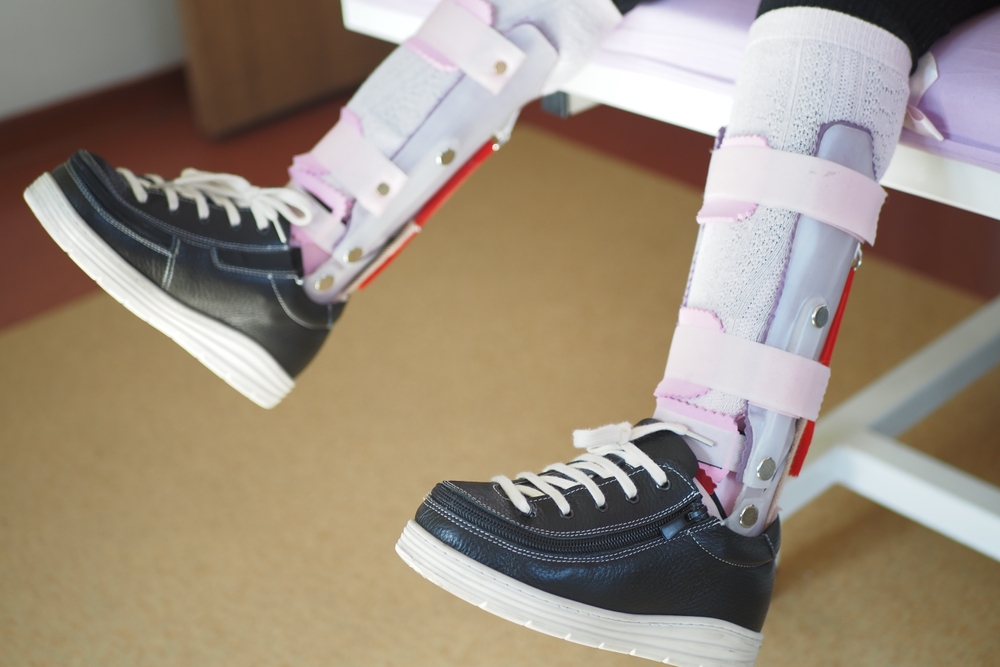
When a child needs a custom orthotic device or prosthetic socket, the stakes are high. Growing bodies change rapidly, timelines matter, and comfort can mean the difference between a child who thrives and one who refuses to wear the device at all. In recent years, 3D printing technology has reshaped how clinicians, engineers, and families approach pediatric medical devices.
From the custom cranial remolding helmet to the pediatric scoliosis brace, additive manufacturing is opening doors that traditional fabrication methods simply could not.
1. Precision Fit That Grows With the Child
One of the most persistent challenges in pediatric orthotics is the fact that children outgrow devices quickly. A traditionally fabricated brace or socket requires significant labor to reproduce, which can delay care and increase costs. With pediatric 3D printed orthotics, clinicians can digitally store a child’s scan data and reprint an updated device in a fraction of the time it would take to remake one by hand.
The precision offered by digital scanning and 3D printing also reduces the trial-and-error process that frustrates families and prolongs treatment. For conditions like plagiocephaly, a custom cranial remolding helmet produced through additive manufacturing can be modeled with sub-millimeter accuracy to the contours of an infant’s head. This level of fit is difficult to achieve consistently with plaster casting methods, and a poorly fitting helmet can reduce treatment effectiveness or cause skin irritation. When fit is dialed in from the start, families spend less time returning to the clinic for adjustments.
For children in states like New York, where access to top-tier medical device manufacturing is relatively strong, these benefits are increasingly available through specialized orthotic providers. NY families seeking pediatric care in densely populated urban centers have more options than ever when it comes to technology-driven orthotic solutions.
2. Lightweight Designs That Improve Compliance
A device that a child refuses to wear is a device that does not work. Pediatric compliance is one of the most important, and most overlooked, factors in orthotic treatment outcomes. Traditional materials like polypropylene and metal components can add unnecessary weight to a device, making it uncomfortable, especially for younger children or those with limited strength.
The lightweight pediatric brace is no longer a luxury. 3D printing allows designers to create lattice structures, perforations, and optimized geometries that reduce overall weight without sacrificing structural integrity. Advanced materials such as flexible thermoplastic polyurethane and carbon fiber composites can be printed in configurations that a traditional fabricator could not replicate by hand.
For a child wearing a pediatric scoliosis brace for 18 to 23 hours per day, even a small reduction in weight and bulk can make a meaningful difference in how willing they are to keep the device on. When children are more compliant, treatment outcomes improve. This is especially relevant for adolescents, who are acutely aware of how a brace looks and feels under clothing. Slimmer, lighter printed designs are far less conspicuous, which removes a significant social barrier to consistent wear.
3. Faster Turnaround Through Streamlined Medical Device Manufacturing
Traditional orthotic fabrication involves multiple manual steps: casting, rectifying a plaster model, vacuum forming plastic, trimming, padding, and fitting. Each step takes time, and the process from initial evaluation to device delivery can stretch over several weeks. For a growing child, that wait can mean the difference between catching a condition at an optimal treatment window and missing it.
3D printing condenses several of these steps into a streamlined digital workflow. A clinician scans the patient, sends the file to a design team, and the resulting model is sent directly to a printer. Medical device manufacturing through additive technology can reduce device turnaround from weeks to days in many cases. When urgent situations arise, such as a rapidly progressing spinal curve in a child with neuromuscular scoliosis, speed is not just a convenience; it is a clinical priority.
Providers specializing in pediatric 3D printed orthotics are also able to iterate designs quickly. If a first print does not fit as expected, revisions can be made digitally and a new version printed without starting over from scratch. This iterative approach reduces waste and gets children into a properly fitting device faster.
4. Enhanced Customization for Complex Pediatric Cases
Not every child presents a straightforward case. Children with cerebral palsy, spina bifida, limb differences, or complex spinal deformities often require devices that fall outside the standard templates used by traditional fabricators. 3D printing excels precisely in these edge cases, because the technology does not rely on molds or forms that assume an average anatomy.
A custom cranial remolding helmet for a child with a severe head shape asymmetry, for example, can be designed entirely from scratch using photogrammetry or structured light scanning. Every contour of the helmet shell corresponds to a specific point on the child’s head, with relief areas and contact zones mapped precisely to promote skull reshaping without pressure points.
Similarly, a pediatric scoliosis brace for a child with a complex double curve combined with significant rotation requires a level of geometric precision that 3D printing handles more reliably than hand fabrication. CAD software allows designers to model corrective forces at specific vertebral levels, and the printer reproduces those geometries exactly. The result is a device that applies therapeutic pressure where it is needed and avoids it where it is not.
5. Cost Efficiency and Accessibility Over Time
The upfront cost of 3D printing technology is substantial, but the long-term economics are increasingly favorable, particularly in pediatric care where devices must be replaced frequently. As a child grows, scans can be retrieved, scaled, and reprinted. The cost per subsequent device drops significantly compared to starting a new fabrication process from zero each time.
For families navigating insurance and out-of-pocket expenses, the potential for lower per-unit costs over the course of treatment is meaningful. Providers investing in medical device manufacturing through additive technology are also able to serve more patients with the same equipment, improving clinic efficiency and potentially making specialized care more accessible in underserved areas.
The lightweight pediatric brace market is growing, and as more providers adopt 3D printing pipelines, competition and economies of scale will continue to drive costs down. Families who might previously have been unable to access a custom cranial remolding helmet or a precisely fitted pediatric scoliosis brace due to geographic or financial barriers may find those barriers shrinking as the technology matures.
Conclusion
3D printing is not simply a novel tool in pediatric orthotics; it is a fundamental shift in what is possible. Children requiring custom devices deserve solutions that fit precisely, weigh as little as possible, arrive quickly, and adapt as they grow. Pediatric 3D printed orthotics, whether in the form of a custom cranial remolding helmet, a lightweight pediatric brace, or a pediatric scoliosis brace tailored to a complex curve, represent the best that modern medical device manufacturing has to offer. For families across the country, including those seeking specialized care in NY, these advances are reshaping outcomes and improving quality of life for some of the most vulnerable patients.
Need a Prosthetic and Orthotic Laboratory Near You?
Prothotic Labratories, Inc. is a family-owned and -operated prosthetics and orthotics specialist based in Farmingdale, New York since 1988. We offer the highest quality of products, services, and patient care for all of your prosthetic and orthotic management needs. We specialize in pediatric prosthetics, but also offer adult products and services as well, such as scoliosis management, creating custom-designed prosthetics for the upper or lower extremities, and much more. We also have extensive experience in the orthotic management of cerebral palsy, arthrogryposis, osteogenesis imperfecta, spinal muscular atrophy, and neuromuscular and idiopathic scoliosis. Give us a call today, or visit us for more information!