

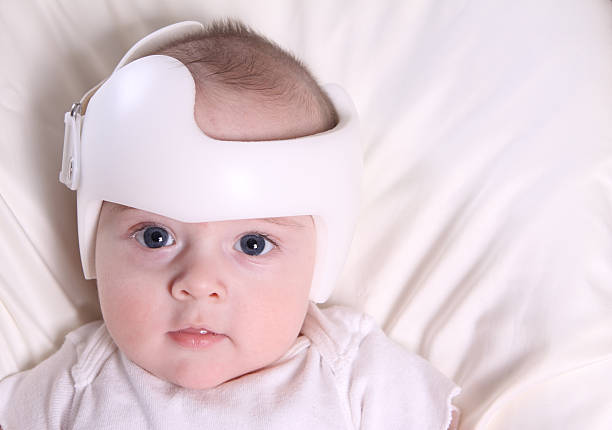
Noticing that your baby’s head looks flatter on one side can raise plenty of questions, especially when you are trying to understand whether the shape will improve naturally or whether treatment should be considered. For families traveling between pediatric appointments, specialists, and everyday routines across Long Island, getting clear guidance can make the process easier to navigate.
Quick answer: Cranial remolding helmets are custom devices that may be recommended for some infants with plagiocephaly or other positional head-shape differences. Whether helmet therapy is appropriate depends on factors such as the baby’s age, growth, head shape, severity, and clinical evaluation. Parents should work with their child’s pediatrician and qualified cranial care professionals to determine whether monitoring, repositioning, physical therapy, helmet therapy, or another approach is appropriate.
What Long Island parents should know
-
Plagiocephaly describes an asymmetrical or flattened head shape, but an evaluation is needed to understand the individual baby’s condition and appropriate next steps.
-
Helmet therapy is not automatically necessary for every baby with a flat spot, so families should seek individualized clinical guidance.
-
Families traveling from communities across Nassau County and Suffolk County may need to plan for evaluations, fittings, and follow-up visits when helmet therapy is prescribed.
-
Babies grow quickly, which makes timely professional evaluation important when parents or pediatricians have concerns about head shape.
-
Cranial remolding treatment typically involves ongoing monitoring rather than simply receiving a helmet and wearing it without follow-up.
Why Does Plagiocephaly Treatment Matter for Long Island Families?
Plagiocephaly treatment matters for Long Island families because early evaluation gives parents an opportunity to understand their baby’s head shape and determine whether professional monitoring or treatment should be considered. The appropriate path is individual to each child, so noticing flattening is a reason to ask questions rather than assume a particular treatment is necessary.
Families throughout Long Island may be balancing pediatric visits with work, childcare, and travel between communities such as Farmingdale, Bethpage, Plainview, Massapequa, Huntington, and other parts of Nassau and Suffolk counties. If cranial remolding therapy becomes part of that schedule, understanding the process beforehand can help parents prepare.
Prothotic Laboratories, Inc. is located in Farmingdale, NY. From that point forward, our goal is to help families better understand the cranial remolding process and the importance of individualized professional care.
What Can Parents Expect From a Cranial Remolding Helmet?
A cranial remolding helmet is designed to guide head growth over time according to an individualized treatment plan. Because infants grow rapidly and head shapes differ from child to child, treatment requires proper evaluation, fitting, monitoring, and adjustments rather than a one-size-fits-all approach.
Parents should expect the process to involve more than the initial fitting. Follow-up allows the treating professional to monitor growth, assess fit, and determine whether adjustments are appropriate.
The exact treatment schedule and duration cannot be determined from general information online. Those decisions depend on the individual baby and should come from the professionals involved in the child’s care.
What Signs May Lead Parents to Ask About Plagiocephaly?
Parents may want to ask their pediatrician about plagiocephaly when they notice persistent flattening, asymmetry, or a head shape that appears different from what they expected. Visual observations can start the conversation, but parents should not try to diagnose the cause or severity based on appearance alone.
Possible reasons to request an evaluation include:
-
One side of the back of the head appears noticeably flatter.
-
The back of the head appears broadly flattened.
-
The head appears asymmetrical when viewed from above.
-
One ear appears positioned differently relative to the other.
-
Facial features appear asymmetrical.
-
A flat area remains noticeable rather than becoming less apparent with growth.
-
A pediatrician raises concerns about the baby’s head shape.
These observations do not establish a diagnosis or mean that a cranial remolding helmet will be recommended.
When Should Long Island Parents Seek Professional Guidance?
Long Island parents should seek professional guidance when they notice persistent head-shape asymmetry, have concerns about their baby’s development, or receive a recommendation for further evaluation from their pediatrician. A qualified professional can assess the child rather than relying on photographs, online comparisons, or advice from other families.
Parents can safely observe their baby’s head shape and keep notes about changes they notice. Medical decisions, however, should involve the child’s healthcare team.
Families in Farmingdale and surrounding Long Island communities should also avoid delaying a recommended evaluation simply because they are uncertain whether helmet therapy will ultimately be needed. An evaluation is a way to gather information. It does not predetermine the treatment recommendation.
What Can Contribute to a Baby Developing a Flat Head Shape?
A baby’s head shape can be influenced by positioning, movement preferences, growth, and other individual factors, which is why the underlying situation should be professionally evaluated. Parents should avoid assuming that a flat area has one specific cause or that it reflects something they did incorrectly.
If a baby consistently favors a particular head position or has difficulty turning comfortably in both directions, parents should discuss that observation with their pediatrician. The healthcare team can determine whether additional evaluation or services are appropriate.
For Long Island parents, the practical takeaway is simple: focus on what you observe, communicate those observations clearly, and let qualified professionals determine their significance.
Can Plagiocephaly Be Prevented at Home?
Parents can discuss age-appropriate positioning and supervised activities with their pediatrician, but home strategies should follow established infant-safety guidance and should not replace a professional evaluation when flattening is already a concern. Advice needs to account for the baby’s age, development, movement, and individual medical needs.
Parents should not modify safe sleep practices in an attempt to change head shape without medical guidance. They also should not purchase or improvise positioning products based solely on online recommendations.
If your pediatrician provides specific positioning or activity recommendations, follow those instructions and ask when your baby’s head shape should be reassessed.
What Results Should Parents Expect From Helmet Therapy?
Parents should expect cranial remolding therapy to be monitored individually, with progress depending on the baby’s growth, starting head shape, treatment plan, and other clinical factors. No responsible general guide can promise a particular amount of correction or an exact treatment timeline for every infant.
Follow-up appointments provide an opportunity to evaluate progress and fit as the baby grows. Parents should use these visits to ask questions about changes they are seeing, care of the device, and what the next stage of treatment involves.
Our approach is to keep the conversation centered on the individual child rather than comparisons with another baby’s experience.
What Mistakes Should Parents Avoid During the Helmet Process?
The most common mistakes to avoid are self-diagnosing, comparing one baby’s treatment plan with another’s, delaying recommended follow-up, and making unapproved changes to a cranial remolding device. Individualized professional guidance is particularly important because babies grow and treatment needs can change.
Mistake: Assuming every flat spot requires a helmet.
Consequence: Parents may become unnecessarily worried or pursue a treatment before receiving an appropriate evaluation.
Better approach: Start with the child’s pediatrician and follow recommended referrals.
Mistake: Comparing treatment timelines with another Long Island family.
Consequence: Expectations may be based on a baby with a different age, head shape, or clinical situation.
Better approach: Ask what milestones apply specifically to your child.
Mistake: Skipping recommended follow-ups.
Consequence: The opportunity to assess fit and progress may be missed.
Better approach: Keep the follow-up schedule provided by the treating professional.
What Is a Common Long Island Plagiocephaly Scenario?
A common Long Island scenario begins when a parent or pediatrician notices persistent flattening and recommends that the baby’s head shape be evaluated more closely. This is a general example, not a patient case study or a description of a specific family treated by us.
A family in Nassau County might notice asymmetry during the baby’s early months and discuss it at a pediatric appointment. If further assessment is recommended, the parents may then visit an appropriate specialist or cranial care provider. Depending on that evaluation, the plan could involve continued monitoring, another form of care, or cranial remolding therapy.
The important point is that treatment follows evaluation, not the other way around.
How Can Professional Cranial Remolding Services Help?
Professional cranial remolding services help by providing individualized assessment, fitting, and follow-up when helmet therapy has been determined to be appropriate for a baby. Parents also gain a place to ask practical questions as their child grows and progresses through treatment.
For families near Farmingdale, having a local resource can make ongoing appointments more manageable than traveling far outside the area for each stage of care.
How Do Monitoring and Helmet Therapy Compare?
Monitoring and helmet therapy serve different situations, and the appropriate option depends on the individual baby’s clinical evaluation rather than a universal rule. Parents should not choose between them based solely on photos, internet discussions, or another family’s experience.
Monitoring may be appropriate when the healthcare team determines that observation is warranted. Other recommendations may also be made based on the child’s needs. Cranial remolding therapy may be considered when professional evaluation indicates that a custom device is appropriate.
The safest decision is an individualized one made with qualified healthcare professionals.
What Long Island Areas Can Families Travel From?
Families seeking cranial remolding information in Farmingdale may come from communities throughout Nassau County, Suffolk County, and the broader Long Island region. Nearby communities include Bethpage, Plainview, Massapequa, and Huntington, along with many other towns within practical driving distance of Farmingdale.
What Can Happen If Parents Put Off an Evaluation?
Putting off a recommended evaluation can delay the information parents need to make an informed treatment decision while their baby continues to grow. That does not mean every head-shape concern is urgent or that every child needs a helmet, but concerns are best addressed with the appropriate healthcare professional rather than prolonged guesswork.
If your pediatrician has suggested further evaluation, following through can clarify whether monitoring or treatment is appropriate.
Frequently Asked Questions About Cranial Remolding Helmets
Does every baby with plagiocephaly need a helmet?
No, not every baby with plagiocephaly necessarily needs a cranial remolding helmet. Treatment decisions depend on an individualized evaluation and may involve monitoring or other recommendations. Parents should discuss concerns with their pediatrician and follow appropriate professional guidance rather than assuming that visible flattening automatically means helmet therapy is required.
When should Long Island parents ask about a cranial helmet?
Long Island parents should ask about a cranial helmet when their pediatrician recommends further evaluation or when persistent head-shape asymmetry raises concerns. Because treatment decisions can be time-sensitive to an infant’s growth and individual development, parents should ask their healthcare team when evaluation is appropriate rather than relying on a general age cutoff online.
How long does a baby wear a cranial remolding helmet?
The length of cranial remolding treatment varies by child and cannot be accurately predicted without an individualized assessment. Factors related to the baby’s growth, head shape, age, progress, and prescribed treatment plan may affect the timeline. Parents should rely on their treating professional for expectations specific to their baby.
Are follow-up appointments important during helmet therapy?
Yes, follow-up appointments are an important part of professionally managed cranial remolding therapy because babies grow and the device may require ongoing assessment. Families traveling to Farmingdale from elsewhere in Nassau or Suffolk County should consider the follow-up schedule when planning treatment and ask what appointment frequency is expected for their child.
Can I tell how severe plagiocephaly is from a photo?
No, parents should not rely on a photograph alone to determine the severity of plagiocephaly or decide whether treatment is necessary. Photos can help parents notice changes, but a qualified professional should perform the appropriate evaluation. If you are concerned about your baby’s head shape, discuss what you see with your pediatrician.
Is cranial remolding treatment available to families outside Farmingdale?
Families from across Long Island can seek information about cranial remolding services in Farmingdale, including parents traveling from nearby Nassau and Suffolk County communities. Because individual service availability and treatment needs vary, parents should contact us directly to discuss their situation and determine the appropriate next step.
Should I change my baby’s sleep position because of plagiocephaly?
Parents should follow established safe-sleep recommendations and speak with their pediatrician before making changes intended to address head shape. A concern about plagiocephaly should not lead families to improvise sleep positions or use unapproved products. Your child’s healthcare team can provide guidance appropriate to your baby’s individual needs.
What should I bring to a cranial remolding appointment?
Parents should ask the provider what records or information are needed before the appointment because requirements can vary. It can also be useful to be prepared to discuss when you first noticed the head-shape concern, what your pediatrician has recommended, and any observations about your baby’s positioning or movement.
Get Clear Answers About Cranial Remolding in Farmingdale
Understanding your baby’s options starts with individualized professional guidance. If your family is navigating questions about plagiocephaly or cranial remolding helmets on Long Island, our team can help you learn more about the evaluation and treatment process.