

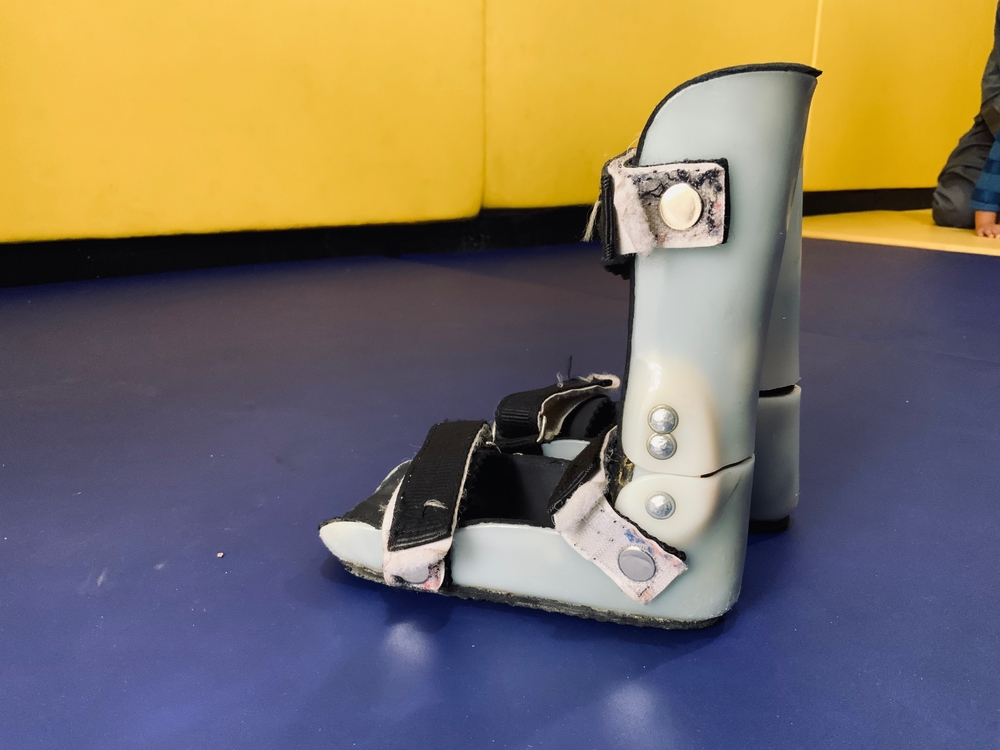
When a child needs extra support for walking, standing, or lower-limb positioning, parents can quickly encounter unfamiliar terms and several different brace options. For families on Long Island, the choice may involve balancing a child’s individual needs with school routines, therapy appointments, footwear, transportation, and everyday activity.
Quick answer: Custom ankle-foot orthoses, commonly called AFOs, are made for an individual child based on their anatomy and prescribed support needs. Off-the-shelf braces are manufactured in standard sizes and may be appropriate when a child needs simpler or more temporary support. The right choice depends on the child’s condition, alignment, mobility goals, growth, and recommendations from the healthcare professionals involved in their care.
What Long Island Parents Should Know
-
A custom AFO is designed around an individual child rather than selected solely from predetermined sizes.
-
Off-the-shelf braces can provide useful support when a standard design appropriately matches the child’s needs.
-
Children can grow quickly, so fit should be monitored whether a family lives in Nassau County, Suffolk County, or elsewhere on Long Island.
-
School, physical therapy, recreation, footwear, and the amount of daily walking a child does can all affect how an orthosis is used.
-
Redness, discomfort, skin irritation, or changes in walking should not simply be ignored because a child is expected to “get used to” a brace.
What Is the Difference Between a Custom AFO and an Off-the-Shelf Brace?
The primary difference between a custom AFO and an off-the-shelf brace is that a custom orthosis is made for an individual child, while an off-the-shelf device comes in standardized sizes and designs. That distinction can affect fit, control, adjustability, and how precisely the device addresses a child’s prescribed needs.
AFOs support the ankle and foot and may influence positioning and movement during standing and walking. Depending on the design, an AFO may provide different degrees of stability or allow different amounts of motion.
An off-the-shelf brace may be suitable when a standard size and configuration provide the support a child needs. A custom device may be considered when anatomy, alignment, movement patterns, or support requirements call for a more individualized solution.
The decision should be based on the child rather than an assumption that one category is always better.
Why Does the Choice of Pediatric Lower Limb Support Matter on Long Island?
The choice matters on Long Island because children often need their orthoses to function across a full day of school, therapy, transportation, recreation, and family activities. A brace that works in one controlled setting still needs to fit into the practical routines a child encounters throughout Nassau and Suffolk counties.
A child might wear an orthosis while walking school hallways, attending therapy, playing with friends, or spending time with family at places such as Eisenhower Park or local community facilities. Seasonal changes can matter, too. Footwear and clothing used during a humid Long Island summer may differ significantly from what a child wears during a cold winter.
At Prothotic Laboratories, Inc., we understand that pediatric lower limb support is not only about the device itself. Fit, function, the child’s needs, and how the orthosis works within daily routines all deserve consideration.
What Do Parents Need to Know About Fit and Growth?
Fit and growth need regular attention because a pediatric orthosis that once fit appropriately may no longer match a growing child’s foot, ankle, or lower leg. Parents should pay attention to both physical fit and changes in how their child moves while using the device.
Children do not all grow at the same rate. Rather than relying on a fixed replacement schedule, families should watch for changes and follow the recommendations of the professionals managing their child’s care.
Long Island families traveling between home, school, therapy, and appointments may find it helpful to make brace checks part of the normal routine. This is especially useful after noticeable growth or changes in footwear.
What Warning Signs Can Suggest a Pediatric Brace Needs Attention?
Warning signs that a pediatric brace needs attention include persistent skin irritation, pain, an obvious change in fit, or a new difficulty using the device. A child who cannot clearly describe discomfort may instead resist wearing the orthosis or begin moving differently.
Parents can watch for:
-
Persistent redness or skin irritation after the orthosis is removed.
-
Blisters, sores, or areas where the device appears to rub.
-
Complaints of pain, pinching, or excessive pressure.
-
Toes or other parts of the foot appearing crowded.
-
Straps that no longer secure the orthosis as intended.
-
New difficulty putting the brace on correctly.
-
A noticeable change in walking while wearing the device.
-
Sudden reluctance to wear an orthosis that was previously tolerated.
Skin breakdown, significant pain, swelling, or an abrupt functional change warrants prompt attention from the appropriate healthcare professional.
When Should Long Island Parents Seek Professional Help With an AFO?
Parents should seek professional guidance when an AFO no longer fits correctly, causes persistent discomfort or skin problems, or appears inconsistent with the child’s current functional needs. Questions about diagnosis, treatment, or changes in a child’s medical condition should be directed to the appropriate medical provider.
Parents can safely perform routine visual checks of the orthosis and their child’s skin. They can also note whether straps, padding, and footwear seem to be functioning as expected.
DIY structural changes are different. Cutting, heating, bending, or otherwise modifying an orthosis without professional guidance could change its fit or function. Families in Long Island communities from Hempstead and Garden City to Huntington and Islip should have concerns about fit or function professionally evaluated rather than trying to redesign a device at home.
Why Might a Child Need More Individualized Orthotic Support?
A child may need individualized orthotic support when standard sizing or a standard brace design does not adequately address the child’s anatomy or prescribed functional goals. The appropriate device depends on the specific child, which is why professional assessment is central to the process.
Factors that may influence device selection include the child’s anatomy, lower-limb positioning, movement, degree of required support, footwear, activity, and anticipated use.
These considerations also help explain why two children of similar ages may receive very different recommendations. An AFO should address the needs of the individual child rather than simply match an age or shoe-size category.
How Can Parents Help Maintain a Child’s Orthosis?
Parents can help maintain a child’s orthosis by checking fit, skin condition, straps, closures, and the device itself on a regular basis. Consistent observation is especially useful as children grow or transition between seasonal footwear on Long Island.
Follow the specific care instructions provided for the child’s device. Keep the orthosis appropriately clean and dry, and inspect it for unusual wear or damage.
Footwear deserves attention as well. The shoe and orthosis must work together, so a change in shoes can affect how the complete setup fits. Before the school year, after a growth spurt, or when switching between warm-weather and winter footwear, parents may want to pay particularly close attention to fit.
What Results Can Families Realistically Expect From Pediatric Orthotic Support?
Families can realistically expect pediatric orthotic support to be directed toward the specific positioning, stability, mobility, or functional goals established for their child. Results vary because the reason for using an orthosis, the device design, the child’s development, and the overall care plan are individual.
A custom device does not automatically guarantee a particular result, and an off-the-shelf brace should not automatically be considered inadequate.
The goal is an appropriate solution for the child. Parents should understand what the device is intended to accomplish and know whom to contact when they notice changes.
What Common Mistakes Should Parents Avoid?
Common mistakes include ignoring fit changes, assuming discomfort is always normal, modifying a brace at home, and choosing a device based only on convenience or price. A better approach is to treat the orthosis as one part of an individualized care plan.
Mistake: Ignoring growth.
Consequence: A device may no longer fit as originally intended.
Better approach: Monitor fit and arrange professional follow-up when changes appear.
Mistake: Assuming persistent redness is expected.
Consequence: Ongoing pressure or rubbing may worsen skin irritation.
Better approach: Follow the skin-check instructions provided for the child and report concerning areas.
Mistake: Making structural DIY adjustments.
Consequence: Changes can affect fit and function.
Better approach: Have adjustments evaluated professionally.
Mistake: Focusing on the brace but not the shoe.
Consequence: A different shoe may alter how the orthosis fits and functions.
Better approach: Consider footwear and orthosis fit together.
What Is a Common Long Island Family Scenario?
A common Long Island scenario is a child whose brace must work across several environments during the same day. This is an illustrative scenario, not a specific patient case.
A child in Nassau County, for example, might wear an orthosis while getting ready at home, traveling to school, walking between classrooms, attending a therapy appointment, and participating in family activities afterward. A device that is difficult to use with the child’s normal shoes or becomes uncomfortable during the day can create practical challenges.
That is why families should discuss everyday use, not only the clinical reason for the orthosis.
What Pediatric Orthotic Solutions May Be Considered?
Pediatric orthotic solutions can range from standardized braces to individually fabricated devices, depending on the child’s prescribed needs. The appropriate option should be determined through the child’s healthcare and orthotic care process rather than selected from a general comparison alone.
For families exploring pediatric lower limb support, we can help address questions about orthotic fit and available options within the services we provide.
How Do Custom AFOs and Off-the-Shelf Braces Compare?
Custom AFOs provide individualized design and fit, while off-the-shelf braces provide standardized designs that may be appropriate for less individualized support needs. Neither option should be chosen solely because it sounds more advanced or more convenient.
| Consideration | Custom AFO | Off-the-Shelf Brace |
|---|---|---|
| Sizing | Made for an individual child | Selected from standard sizes |
| Design | Can be individualized to prescribed needs | Predetermined design |
| Fit | Based on the child’s anatomy | Depends on available sizing |
| Adjustments | May allow individualized professional modifications | Adjustment options depend on the product |
| Best choice | Depends on professional assessment | Depends on professional assessment |
For Long Island parents, the practical question is not simply “custom or off-the-shelf?” It is “Which option appropriately addresses my child’s current needs?”
Where Can Long Island Families Seek Pediatric Orthotic Support?
Long Island families can seek pediatric orthotic guidance when they need help understanding fit, device options, or the next steps in their child’s orthotic care. Prothotic Laboratories, Inc. serves the Long Island, New York area, including families throughout Nassau County and Suffolk County.
What Can Happen If a Poorly Fitting Orthosis Is Ignored?
Ignoring a poorly fitting orthosis can allow discomfort, skin irritation, or problems using the device to continue rather than giving professionals an opportunity to evaluate the issue. Children also grow, so a previously appropriate fit should not be assumed to remain appropriate indefinitely.
Parents do not need to panic over every small change. They should, however, take persistent or significant changes seriously and contact the appropriate professional rather than waiting for the problem to resolve on its own.
Frequently Asked Questions About Pediatric AFOs on Long Island
Are custom AFOs always better than off-the-shelf braces?
No, custom AFOs are not automatically better for every child. A custom device provides individualized fit and design, while a standard brace may adequately address some children’s needs. The appropriate choice depends on the child’s anatomy, condition, functional goals, and professional recommendations rather than the assumption that custom is always preferable.
How do I know if my child needs a custom AFO on Long Island?
A professional assessment is the appropriate way to determine whether your child needs a custom AFO. Factors can include anatomy, alignment, movement, required support, current function, and how well standard options fit. Parents should avoid choosing a device solely from online descriptions or another child’s experience.
How often should a child’s AFO fit be checked?
A child’s AFO should be monitored regularly and professionally reassessed when growth, discomfort, skin changes, or functional changes raise concerns. There is no single schedule appropriate for every child. Long Island parents should follow the specific follow-up recommendations given by their child’s healthcare and orthotic professionals.
Can my child wear the same AFO with different shoes?
Different shoes can change how an AFO fits, so footwear should be considered together with the orthosis. A shoe that accommodates the device well may differ from one that crowds it or changes positioning. This can become particularly relevant for Long Island families switching between seasonal shoes.
Is redness after wearing an AFO normal?
Persistent or concerning redness should be evaluated rather than automatically treated as normal. Parents should follow the skin-monitoring instructions provided for their child’s device. Blisters, sores, significant pain, swelling, or persistent irritation deserve prompt attention from the appropriate professional.
Can I adjust my child’s AFO myself?
Parents should avoid structural modifications to an AFO unless specifically instructed by the professional managing the device. Cutting, heating, bending, or altering components could affect fit and function. Routine tasks performed according to provided instructions are different from modifying the orthosis itself.
Can a child outgrow an AFO quickly?
Yes, growth can change the fit of an AFO, but the timing varies considerably from child to child. Families throughout Nassau and Suffolk counties should watch for crowding, strap changes, skin irritation, discomfort, or other signs that the device may need reassessment rather than relying only on elapsed time.
What should I bring to a pediatric orthotic appointment?
Parents should follow the provider’s specific instructions about what to bring to an appointment. Depending on the visit, items such as the child’s current orthosis and commonly worn footwear may be useful. If you are scheduling with us, ask what we would like you to bring for your child’s particular appointment.
Help Your Child Get the Right Orthotic Support on Long Island
Pediatric lower limb support should reflect the needs of the individual child, from fit and function to growth and everyday routines. For Long Island families, understanding the difference between custom AFOs and off-the-shelf braces is a useful first step toward having a more informed conversation about care.
Find the Right Fit for Your Child’s Everyday Needs
We can help families better understand pediatric orthotic options and address concerns about fit and function within the services we provide.